Organizational & Executive Coaching for High-Performance Teams in Vancouver
Organizational and executive coaching at Baraka OCC is a structured, results-focused process designed to build high-performing teams, emotionally intelligent leaders, and resilient workplace cultures. By combining strategic guidance with human-centred development, this service helps organizations align people, performance, and purpose.
This service is provided by Soheila Ansari and Akbar Barzegari, experienced facilitators who bring a blend of organizational insight, psychological understanding, and coaching expertise to their work with leaders, managers, and teams.
What Is Organizational Coaching?
Organizational coaching focuses on improving how people think, relate, and perform at work—across individuals, teams, and leadership levels. Rather than being limited to “fixing” performance problems, it:
- Develops leadership capacity at all levels
- Strengthens team cohesion and collaboration
- Supports change management and culture shifts
- Enhances communication, accountability, and trust
- Aligns individual performance with strategic business goals
The aim is not just short-term performance boosts, but sustainable, systemic improvement that helps organizations thrive in a changing business environment.
Types of Coaching Inside Organizations
1. Leadership & Executive Coaching
Leadership coaching is designed for executives, senior leaders, and emerging managers who influence culture and strategy. It typically focuses on:
- Strategic thinking and decision-making
- Emotional intelligence and relational skills
- Difficult conversations and conflict navigation
- Leading through change and uncertainty
- Developing a clear leadership identity and vision
With skilled coaching, managers don’t just “manage tasks” — they become trusted leaders who inspire performance and psychological safety.
2. Performance Coaching for Individuals
Performance coaching helps employees improve how they work day-to-day. It is especially useful when people are:
- Transitioning into new roles or responsibilities
- Needing to build specific skills or capacities
- Struggling with productivity, focus, or communication
- Preparing for promotion or broader responsibilities
This process includes clear goal-setting, structured feedback, and practical strategies. When done well, performance coaching:
- Increases self-awareness
- Improves ownership and accountability
- Reduces disengagement and quiet quitting
- Enhances job satisfaction and retention
3. Team Coaching for High-Performance Collaboration
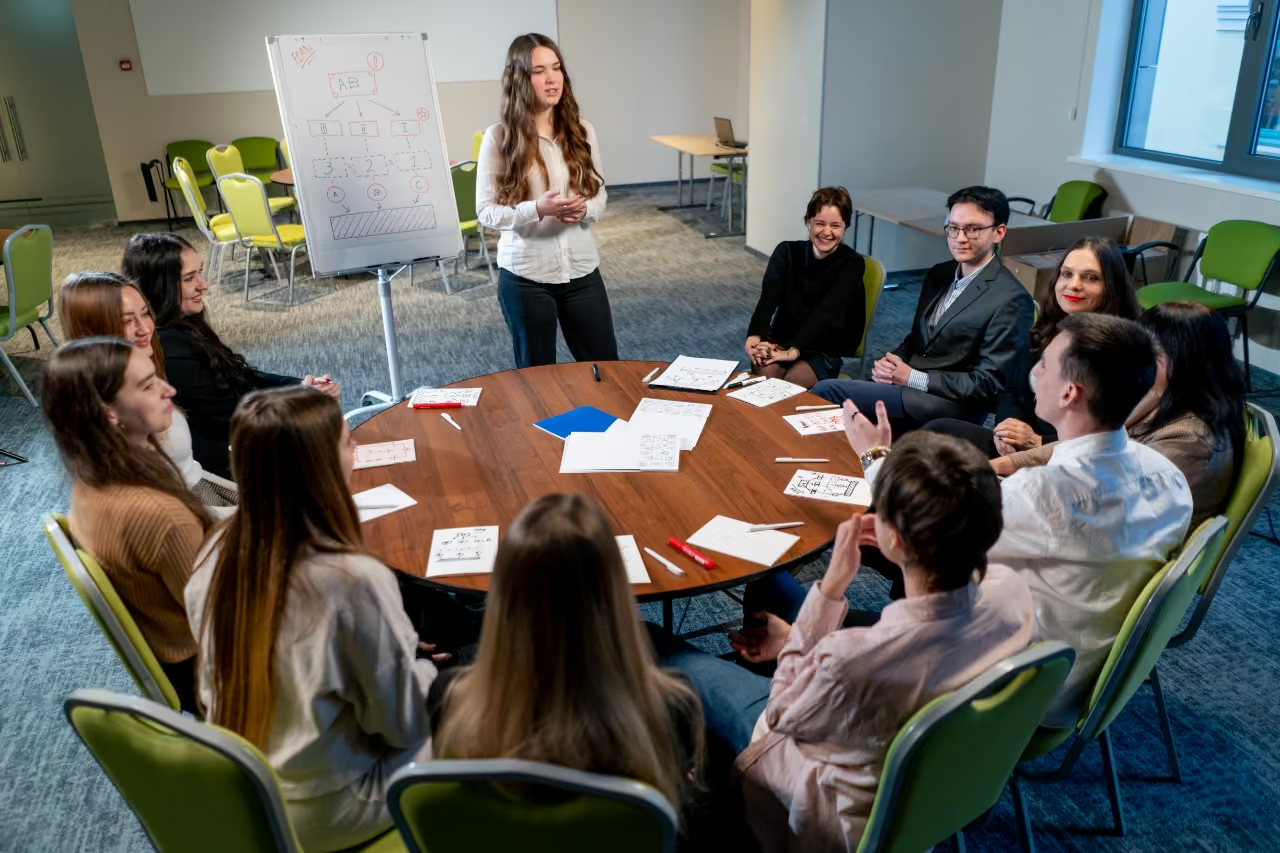
Team coaching works with intact teams (e.g., departments, project groups, leadership teams) to improve how they work together, not just what they deliver.
Common areas of focus:
- Team roles, expectations, and norms
- Communication patterns and meeting effectiveness
- Trust, psychological safety, and feedback culture
- Conflict resolution and difficult dynamics
- Alignment with organizational vision and strategy
A well-coached team is not only efficient—it is cohesive, resilient, and innovative.
Key Benefits of Organizational & Executive Coaching
Improved Team Dynamics & Collaboration
Coaching encourages open communication, skillful listening, and mutual respect. Teams learn to:
- Address issues early instead of avoiding them
- Use conflict constructively rather than destructively
- Leverage individual strengths for collective success
This creates healthier dynamics and a more agile, innovative team.
Enhanced Employee Engagement & Retention
Employees who feel seen, supported, and developed are more likely to:
- Stay with the organization
- Contribute ideas and take initiative
- Take ownership of their performance
Coaching sends a clear message: “You matter here, and your growth is important.” This significantly reduces costly turnover and burnout.
Stronger Leadership Pipeline
Organizational coaching helps identify and develop emerging leaders before they are thrown into high-stakes roles unprepared. Over time, this builds:
- A robust internal talent pipeline
- Succession readiness
- A culture of mentorship and continuous learning
Leaders who are coached are more likely to coach others—creating a multiplier effect throughout the organization.
Strategic Alignment & Organizational Growth
When individuals and teams understand how their work connects to strategic goals, performance naturally intensifies. Coaching supports:
- Clear goal alignment across roles and departments
- Better prioritization and decision-making
- Greater adaptability during market or organizational change
The result is more focused execution, stronger culture, and sustainable growth.
Our Approach at Baraka OCC
Organizational and executive coaching at Baraka OCC is facilitated by Soheila Ansari and Akbar Barzegari, who bring:
- Experience with diverse teams and leadership levels
Working with managers, executives, and cross-functional teams in complex environments. - Psychologically informed coaching
Integrating principles from counselling, emotional intelligence, and behavioural science to understand what actually drives human performance and resistance. - Culturally responsive and trauma-aware practice
Recognizing cultural nuance, identity, and lived experience as critical factors in leadership and team dynamics—particularly in diverse workplaces like Vancouver. - Ethical and confidential support
Adhering to high standards of professionalism, confidentiality, and respect in all coaching engagements.
Their focus is not only “hitting KPIs” but also building healthy, resilient systems where performance and well-being can coexist.
How a Typical Coaching Engagement Works
While each organization is unique, a typical process may include:
1. Discovery & Needs Assessment
- Clarifying organizational goals and pain points
- Identifying key stakeholders and target groups (leaders, teams, departments)
- Gathering baseline information (surveys, interviews, feedback)
2. Goal Setting & Program Design
- Defining clear, measurable coaching objectives
- Choosing formats: one-to-one coaching, group coaching, team coaching, or a blend
- Determining duration, frequency, and structure of sessions
3. Coaching Sessions
- Regular coaching sessions for individuals or teams
- Focus on real-time challenges, role-plays, and reflective practice
- Skill-building in communication, leadership, and self-management
4. Integration & Application
- Translating insights into concrete behavioural changes
- Supporting leaders in applying new approaches in meetings, conversations, and decision-making
- Encouraging feedback loops within teams
5. Evaluation & Refinement
- Reviewing progress against initial goals
- Gathering qualitative and quantitative feedback
- Adjusting the coaching plan as needed for continued impact
Frequently Asked Questions (FAQs)
1. How is organizational coaching different from training or workshops?
Training often delivers concepts in a short, one-way format. Coaching is ongoing, interactive, and customized, supporting people as they apply learning in real situations over time. It changes behaviour and culture, not just knowledge.
2. Who is a good fit for organizational or executive coaching?
Executives and senior leaders
New or emerging managers
Teams experiencing conflict, low morale, or misalignment
Growing organizations undergoing change, restructuring, or scaling
If your organization wants more than one-off “quick fixes,” coaching is a strong fit.
3. How long does an organizational coaching engagement usually last?
Engagements vary, but many organizations find meaningful results over 3–12 months, depending on scope, number of participants, and depth of change desired.
4. Can coaching be done online for remote or hybrid teams?
Yes. Sessions can be offered in person or virtually, making it easy to include remote or geographically distributed leaders and teams.
5. How do we measure the impact of coaching?
Impact can be tracked through:
Changes in engagement and retention
360° feedback and leadership assessments
Team performance indicators and collaboration metrics
Qualitative feedback from participants and stakeholders
Coaching is most effective when its outcomes are intentionally connected to your strategic goals.
6. Is coaching only for struggling employees or teams?
No. Some of the highest returns come from coaching already capable leaders and teams who want to elevate their performance, culture, and impact. Coaching is about acceleration and alignment, not just remediation.